

Texas Estate Planning Resources
Explore videos, answers, and tools to help you understand and plan with confidence under Texas law.
Jump To:
Start Here: Texas Estate Planning
Estate planning can feel complicated, but you don't need to understand everything before you begin. Start with these videos to learn the Texas estate planning basics and the decisions most families should consider when putting a plan in place.
Do You Need a Will or a Trust in Texas?
Do You Really Need a Living Trust in Texas?
Who Should Be Your Executor in Texas?
5 Estate Planning Documents Every Texas Family Needs
Is Probate Really That Bad in Texas?
Texas Wills
A will is one of the most familiar estate planning documents, but Texas law determines what a will can accomplish and what happens when someone dies without one. These videos explain wills, executors, intestacy, and other important Texas considerations.
Dying Without a Will in Texas: What Happens Next?
Who Should Be Your Executor in Texas?
Can You Handwrite Your Own Will in Texas?
Texas Living Trusts
Living trusts can be useful estate planning tools, but not every Texas family needs one. Learn how revocable living trusts work, when they may help avoid probate, what assets may belong in a trust, and what a trust can—and cannot—accomplish.
Do You Really Need a Living Trust in Texas?
Do You Need a Will or a Trust in Texas?
Revocable Living Trust Protect From Creditors in Texas?
Should You Put Your House in a Living Trust in Texas?
Texas Probate & Estate Administration
Probate is the legal process used to administer many estates after someone dies, but not every Texas probate works the same way. These videos explain Texas probate, independent and dependent administration, and when probate may be simpler—or more burdensome—than people expect.
Is Probate Really That Bad in Texas?
Texas Probate: 2 Real Stories of When Estate Planning Worked
How Probate Works in Texas (And Why a Will Matters)
Powers of Attorney & Health Care
Estate planning isn't only about what happens after death. Powers of attorney and health care documents allow you to choose who can make financial and medical decisions for you if you become unable to make those decisions yourself.
5 Estate Planning Documents Texas Families Need
Texas Medical Power of Attorney vs. Living Will: What's the Difference?
Who Makes Medical Decisions for You If You Can’t? (Texas)
Planning for Children & Families
For parents, estate planning involves more than deciding who receives property. These videos address important decisions involving guardians, minor children, inheritance, and how Texas families can plan for the people who depend on them.
Who Raises Kids If Something Happens to You in Texas?
Estate Planning for Young Texas Families: Protecting Your Children
Moving to Texas & Texas-Specific Planning
Moving to Texas can affect more than your address. These videos explain Texas-specific estate planning issues involving wills, trusts, powers of attorney, community property, and other considerations for people making Texas their home.
Move to Texas? 3 Estate Things To Review
Common Texas Estate Planning Questions
Begin with these Texas-focused estate planning videos to understand key concepts and decisions.
-
A will directs how your property should be distributed after death and usually requires probate. A revocable living trust can help certain assets pass outside probate and may simplify estate administration. Whether a trust makes sense depends on your assets, goals, and family situation.
-
When a person dies without a will, Texas law determines who inherits their property. This process is called intestate succession. The rules vary depending on whether the person was married, had children, or owned community property.
-
Yes. Texas is a community property state. In general, property acquired during marriage is owned jointly by both spouses. Community property rules can affect how assets pass at death and how estate plans are structured.
-
The length of probate varies depending on the estate and whether there are disputes. In many cases, probate administration may take several months to more than a year.
-
Certain assets may pass outside probate, including:
• assets held in a living trust
• life insurance with a named beneficiary
• retirement accounts with a beneficiary designation
• payable-on-death or transfer-on-death accounts
• some jointly owned property -
In some cases, Texas law allows property transfers through tools such as a transfer-on-death deed. These options must be properly executed before death.
-
If you own property, have children, want to avoid probate, or have questions about how Texas law applies to your situation, it is usually helpful to consult with a Texas estate planning attorney to develop a plan tailored to your needs.
Estate Planning Starter Workbook
A simple worksheet designed to help individuals and families organize the key information needed for estate planning.
Completing the workbook can help clarify planning goals, identify important assets, and prepare for conversations with an estate planning professional.
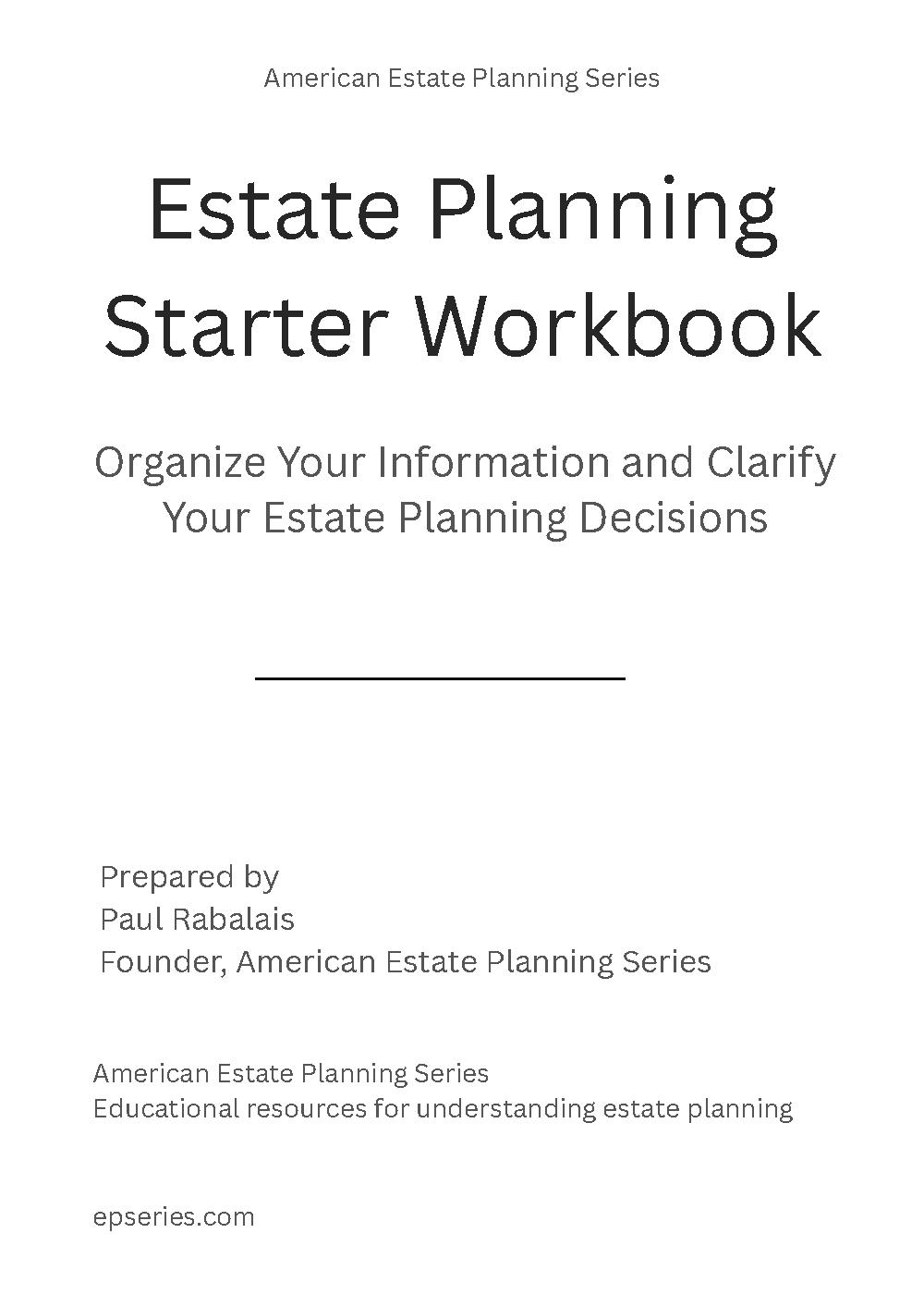
17-page fillable PDF
Download instantly — no email or signup required
The Estate Planning Starter Workbook is designed to help individuals and families begin organizing the information commonly needed for estate planning.
Completing the workbook can help clarify planning goals, identify important assets, and prepare for conversations with an estate planning professional.
This workbook may be helpful if you:
want to begin organizing your estate planning information
are thinking about creating or updating an estate plan
want to better understand your assets and beneficiaries
plan to meet with an estate planning attorney in the future
want to organize information for your family
What the workbook includes:
Personal and family information
Asset and property overview
Beneficiary designations
Planning goals and priorities
Notes and questions for future planning discussions
Many people find it helpful to complete the workbook before meeting with an estate planning attorney or beginning the planning process.
Meet Jared Norton—North Dallas

Jared Norton
AEPS Contributing Attorney for North Dallas
Norton Law, PLLC
North Dallas
Phone: 972-736-8594
Website: https://ksnortonlaw.com/
Jared contributes educational videos about Texas estate planning. Contact his office to discuss your planning needs and whether his practice can assist you.