

Louisiana Estate Planning Resources
Explore videos, answers, and tools to help you understand and plan with confidence.
Jump To:
Common Louisiana Estate Planning Questions
-
A will allows you to control how your property is distributed and who will handle your estate after death. Without a will, Louisiana’s intestate succession laws determine who inherits. Those rules may not reflect your wishes, especially in blended families or when specific assets should go to certain beneficiaries.
-
When someone dies without a will, Louisiana law determines who inherits the property. These rules are called intestate succession laws. Depending on the family situation, assets may pass to a surviving spouse, children, parents, or other relatives according to a fixed legal order.
-
Forced heirship is a Louisiana rule that protects certain children from being disinherited. In some cases, a portion of a parent’s estate must go to children who qualify as forced heirs. The rules are complex and depend on factors such as the child’s age or disability.
-
Succession is the Louisiana legal process for transferring property after someone dies. Other states call this probate, but Louisiana uses a civil-law system with different procedures and terminology. Some estates require court involvement, while others may qualify for simplified processes.
-
Louisiana does not use the term probate the way most other states do. Instead, the legal process for transferring property after someone dies is called succession. While succession serves a similar purpose as probate in other states, the procedures and terminology are different because Louisiana follows a civil-law legal system.
-
A usufruct allows one person to use property during their lifetime while another person owns the underlying interest. This is commonly used to allow a surviving spouse to use property while children inherit ownership. Usufruct arrangements are a common feature of Louisiana estate plans.
-
Louisiana is a community property state, meaning many assets acquired during marriage are jointly owned by both spouses. This affects how property can be transferred during life and after death. Estate planning strategies must take community property rules into account.
-
In most cases, a will does not completely avoid succession in Louisiana. A will can simplify the process and make sure property is distributed according to your wishes, but the estate usually still goes through some form of succession proceeding. Certain assets, such as those with beneficiary designations or assets held in trust, may transfer outside of succession.
-
Some Louisiana families benefit from using trusts to manage assets, provide for children, or avoid certain succession complications. However, many estate plans can be accomplished with wills and other planning tools. The right approach depends on the family’s goals, assets, and circumstances.
-
Louisiana follows a civil-law legal system, unlike the common-law systems used in the other 49 states. Concepts such as forced heirship, usufruct, and succession procedures make Louisiana estate planning unique. Because of these differences, strategies used in other states may not apply in Louisiana.
Still have questions about Louisiana estate planning?
Explore the educational videos and resources on this page.
Featured Estate Planning Resources
Practical guides and worksheets to help you organize your estate plan and make important decisions for your family.
5-Minute Estate Planning Checkup
Not sure whether your estate plan is complete? This free worksheet will help you identify common gaps and prioritize your next steps.
Who Should I Put In Charge?
Choosing the right people to serve as executor, trustee, financial agent, healthcare agent, and guardian can be one of the most important decisions in estate planning. This workbook will help you evaluate each role and make those choices with greater confidence.
Louisiana Estate Planning Library
Browse our growing library of Louisiana-specific estate planning videos, articles, FAQs, and educational resources, organized by topic to help you find the information most relevant to your family.
Louisiana Estate Planning Essentials
Why Louisiana Estate Planning Is Different Than Every Other State
What Happens If You Die Without a Will in Louisiana?
What Documents Should Louisiana Families Review Every Few Years?
Louisiana Wills
Who Should You Choose as Executor of Your Louisiana Will?
Will or Trust? Which Is Better in Louisiana?
Are Handwritten Wills Valid in Louisiana?
Louisiana Trusts
Will or Trust? Which Is Better in Louisiana?
Louisiana Revocable Living Trusts: How They Actually Work
Should You Put Your House in a Trust in Louisiana?
Trust Funding Basics in Louisiana (What “Funding” Means)
Louisiana Successions
Do You Need a Succession in Louisiana?
Can You Avoid a Succession in Louisiana? (A Will Isn't Enough)
What Happens After Someone Dies in Louisiana?
Independent Administration: How to Make Succession Easier
How Long Does Succession Take in Louisiana?
Louisiana Community Property
Louisiana Community Property Explained: What Every Married Couple Should Know
Who Gets Your House When You Die in Louisiana?
Louisiana Usufruct
What Is a Usufruct? A Louisiana Estate Planning Explanation
Louisiana Forced Heirship
What Is Forced Heirship in Louisiana?
Louisiana Powers of Attorney
Power of Attorney Explained (The Document That Can Save Your Family)
Should You Put Your Child on Your Bank Account in Louisiana?
Louisiana Healthcare Directives
Louisiana Estate Planning for Families
Should You Leave Your Estate Equally to Your Children in Louisiana?
Blended Families in Louisiana: The Biggest Estate Planning Mistakes
Should You Give Your House to Your Children Before You Die in Louisiana?
Remarrying in Louisiana? What Happens to Your Estate Plan?
Louisiana Taxes & Wealth Transfer Planning
Estate Taxes and Inheritance Taxes: What Louisiana Families Should Know
Louisiana Elder Law & Long-Term Care
Louisiana Government & Official Resources
Louisiana Secretary of State
Business filings, commercial database searches, and official business records.
Louisiana Department of Revenue
State tax information, forms, and guidance for Louisiana taxpayers.
Social Security Administration
Survivor benefits, reporting a death, Medicare, and retirement information.
Meet Your Louisiana Estate Planning Attorney
If you live in Louisiana and would like guidance tailored to your family, goals, and Louisiana law, you may connect with the Louisiana Contributing Attorney for the American Estate Planning Series.

Catherine Martinez
Louisiana Contributing Attorney
Rabalais Martinez, LLC
Serving Louisiana families through planning meetings by Zoom and signing meetings in Baton Rouge and New Orleans.
For more than 15 years, Catherine Martinez has helped Louisiana families navigate wills, trusts, succession proceedings, powers of attorney, and other estate planning matters. She serves as the Louisiana Contributing Attorney for the American Estate Planning Series, where she creates educational videos and resources specifically for Louisiana families.
Through Rabalais Martinez LLC, Catherine works with Louisiana individuals and families to create thoughtful estate plans designed to provide clarity, protection, and peace of mind.
Because Louisiana follows a civil law system that differs from the laws of most other states, estate planning decisions often involve unique considerations related to succession, forced heirship, community property, and usufruct. Catherine’s participation in the American Estate Planning Series helps ensure that Louisiana-specific educational content remains practical, accessible, and aligned with Louisiana law.
The Louisiana hub of the American Estate Planning Series builds upon years of educational content created to help Louisiana families better understand their planning options and make more informed decisions for the future.
Louisiana Estate Planning Book
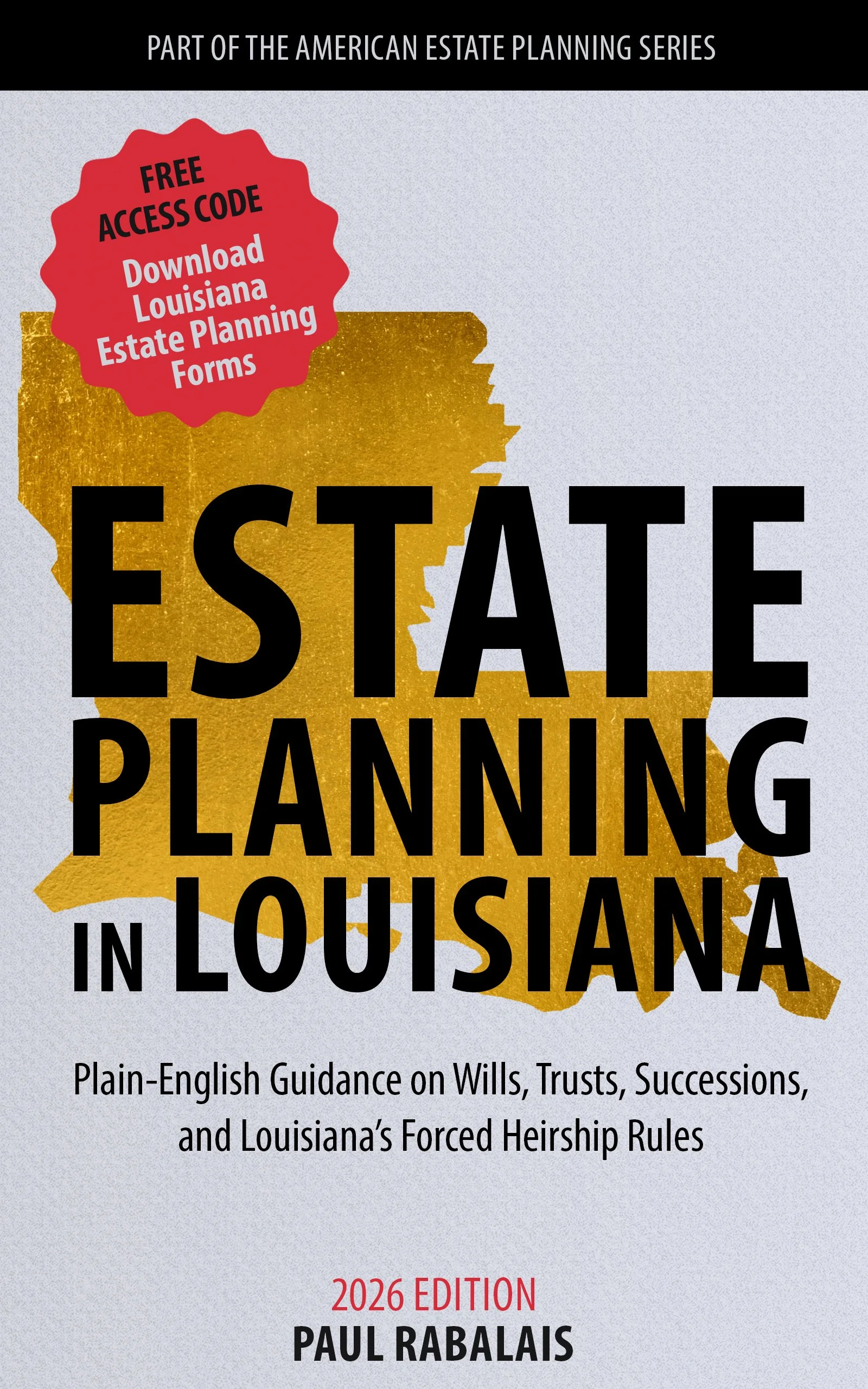
Estate Planning in Louisiana provides a clear, step-by-step explanation of Louisiana-specific rules, common pitfalls, and planning options—so you can make informed decisions before taking the next step.
Written by Louisiana estate planning attorney Paul Rabalais, the guide explains wills, trusts, succession, and other Louisiana-specific planning issues in plain English.
Ready to Take the Next Step?
If you’re ready to move forward after reviewing these Louisiana estate planning resources, you may begin the Louisiana planning process with the Louisiana Contributing Attorney for the American Estate Planning Series.

Catherine Martinez
Louisiana Contributing Attorney
Rabalais Martinez, LLC
Serving Louisiana families through Zoom planning meetings and signing meetings in Baton Rouge and New Orleans.
Most clients begin by completing the estate planning questionnaire so the firm can better understand their goals and planning needs before any attorney meeting is scheduled.