

Colorado Estate Planning Resources
Clear, Colorado-specific guidance to help you understand your options, avoid common mistakes, and move forward with confidence.
Start with the basics or explore specific topics below.
Start Here: The Basics
If you’re new to estate planning, start with these foundational concepts.
Will vs. Trust: What the Difference Really Is
The Estate Planning Conversation Your Family Needs Before It’s Too Late
These concepts provide the foundation for everything else.
What Makes Colorado Estate Planning Different
Colorado Estate Planning Basics
These videos focus specifically on how estate planning works under Colorado law.
Understanding these basics will help you make more informed decisions about your plan.
What Makes Colorado Estate Planning Different
How Probate Works in Colorado And How to Avoid It
Do You Need a Will or a Trust in Colorado?
Common Colorado Estate Planning Questions
Short answers to common questions about estate planning in Colorado.
-
A will directs how your assets are distributed, but it typically goes through probate. A trust can allow assets to pass outside of probate and may provide additional control and privacy. The right choice depends on your goals and your assets.
-
Colorado offers a relatively streamlined probate process, and many estates qualify for informal probate. However, probate still involves legal procedures, takes time, and becomes part of the public record.
-
Some assets can pass outside of probate, including those with beneficiary designations or held in a trust. Planning ahead can help reduce or avoid probate, depending on your situation.
-
If you don’t have a will, Colorado law determines who receives your assets. This may not align with your preferences and can create additional complications for your family.
-
For certain assets—like retirement accounts and life insurance—the beneficiary designation controls who receives the asset, regardless of what your will says.
-
You should review your plan after major life events, such as marriage, divorce, the birth of a child, or significant changes in your financial situation.
-
Yes. Estate planning laws vary by state, so it’s important to make sure your plan reflects Colorado law.
-
An attorney helps you design a plan that fits your goals, ensures your documents are legally valid in Colorado, and coordinates your assets so everything works together.
Estate Planning Starter Workbook
A simple worksheet designed to help individuals and families organize the key information needed for estate planning.
Completing the workbook can help clarify planning goals, identify important assets, and prepare for conversations with an estate planning professional.
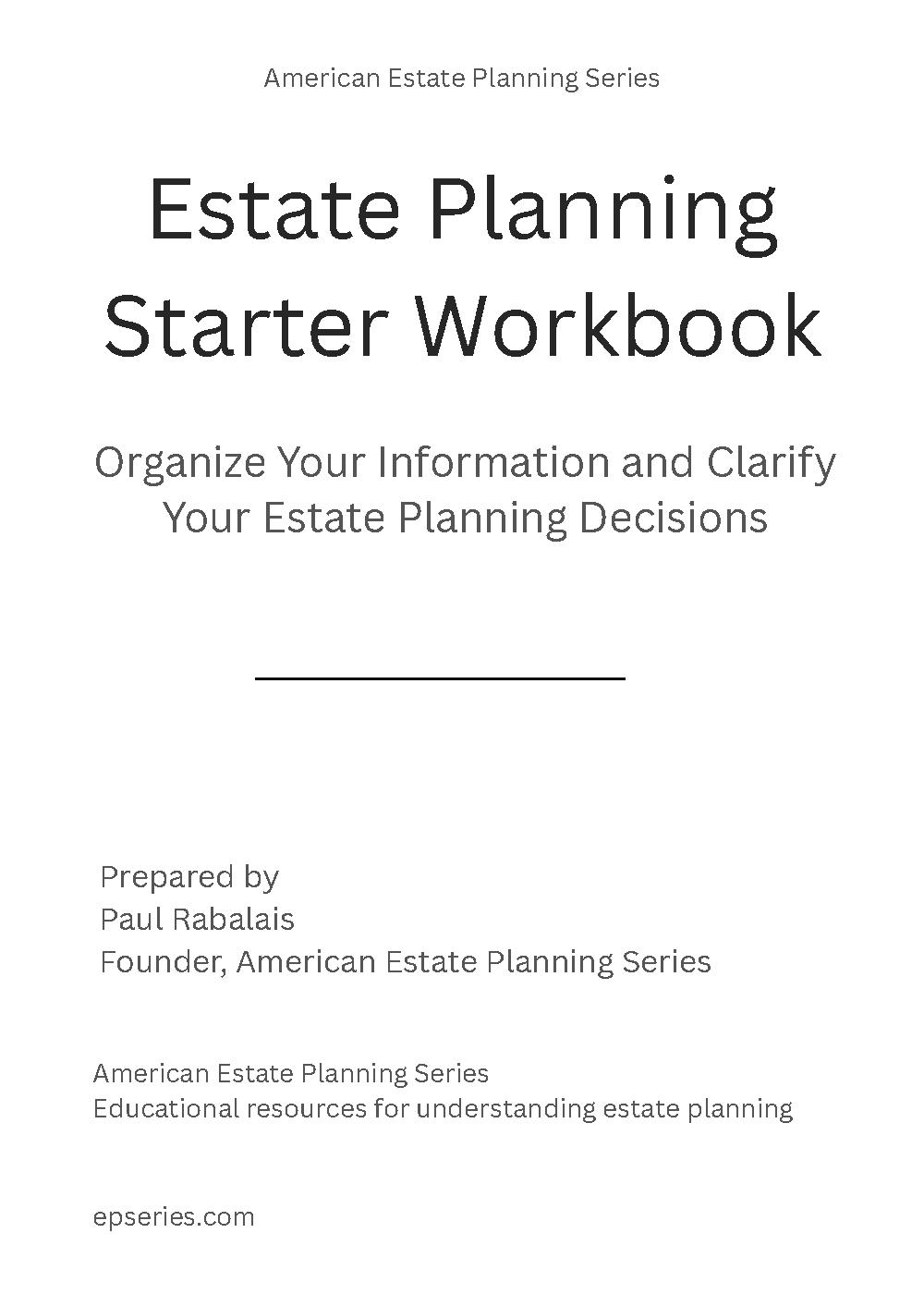
17-page fillable PDF
Download instantly — no email or signup required
The Estate Planning Starter Workbook is designed to help individuals and families begin organizing the information commonly needed for estate planning.
Completing the workbook can help clarify planning goals, identify important assets, and prepare for conversations with an estate planning professional.
This workbook may be helpful if you:
want to begin organizing your estate planning information
are thinking about creating or updating an estate plan
want to better understand your assets and beneficiaries
plan to meet with an estate planning attorney in the future
want to organize information for your family
What the workbook includes:
Personal and family information
Asset and property overview
Beneficiary designations
Planning goals and priorities
Notes and questions for future planning discussions
Many people find it helpful to complete the workbook before meeting with an estate planning attorney or beginning the planning process.
Colorado Estate Planning Attorney
When you’re ready, working with a Colorado estate planning attorney can help you put a plan in place that reflects your goals and complies with Colorado law.
We are currently identifying a Colorado contributing attorney.