

Pennsylvania Estate Planning Resources
Explore Pennsylvania estate planning videos, answers, and practical tools to help you plan with clarity and confidence.
Jump To:
Pennsylvania Contributing Attorney
Patrick Cawley is the Pennsylvania Contributing Attorney for the American Estate Planning Series™ and founder of Keystone Elder Law, P.C.
Based in Central Pennsylvania, Patrick helps individuals and families navigate estate planning, incapacity planning, probate, and long-term care considerations under Pennsylvania law.

Patrick Cawley
Pennsylvania Contributing Attorney
American Estate Planning Series
Keystone Elder Law, P.C.
Serving Central Pennsylvania, including the Harrisburg area and surrounding communities.
📞 (717) 697-3223
🌐 KeystoneElderLaw.com
Common Pennsylvania Estate Planning Questions
Find answers to common Pennsylvania estate planning questions and learn the concepts that affect many Pennsylvania families.
-
Many Pennsylvania residents assume they automatically need a trust, but that is not always the case. For some people, a well-designed will and beneficiary plan may be appropriate, while others benefit from trust-based planning depending on their goals, assets, privacy concerns, and family situation.
-
If someone dies without a will, Pennsylvania intestacy laws determine who inherits the estate. The outcome may not reflect the person’s wishes, especially in blended families or situations involving unmarried partners, stepchildren, or complicated family dynamics.
-
Probate is the legal process used to administer a person’s estate after death. In Pennsylvania, probate may involve validating a will, gathering assets, paying debts, and distributing property to beneficiaries. Some assets pass outside probate through beneficiary designations or joint ownership.
-
In many situations, properly funded trusts can help reduce or avoid probate for certain assets. However, trusts are not automatically necessary for everyone, and whether a trust makes sense depends on your goals, assets, and planning priorities.
-
A Pennsylvania estate plan may include a will, powers of attorney, healthcare directives, beneficiary planning, and sometimes one or more trusts. The right combination depends on your family, finances, and long-term goals.
-
Powers of attorney allow someone you trust to handle financial or medical decisions if you become unable to act for yourself. Without proper incapacity planning, families may face unnecessary delays, court involvement, or uncertainty during difficult situations.
-
Pennsylvania is one of the states that imposes an inheritance tax. The rate can vary depending on the relationship between the beneficiary and the person who passed away. Understanding how inheritance tax works can be an important part of estate planning.
-
Estate plans should be reviewed periodically and after major life events such as marriage, divorce, births, deaths, retirement, relocation, or significant financial changes. Laws and family circumstances can change over time, making updates important.
-
Long-term care planning involves preparing for the financial and legal challenges that can arise from nursing home or assisted living costs. Planning early may help preserve flexibility, protect assets, and reduce stress on family members later.
-
No. Estate planning is important for families at many income and asset levels. Even relatively simple plans can help avoid confusion, reduce conflict, protect loved ones, and make decision-making easier during difficult times.
Estate Planning Starter Workbook
A simple worksheet designed to help individuals and families organize the key information needed for estate planning.
Completing the workbook can help clarify planning goals, identify important assets, and prepare for conversations with an estate planning professional.
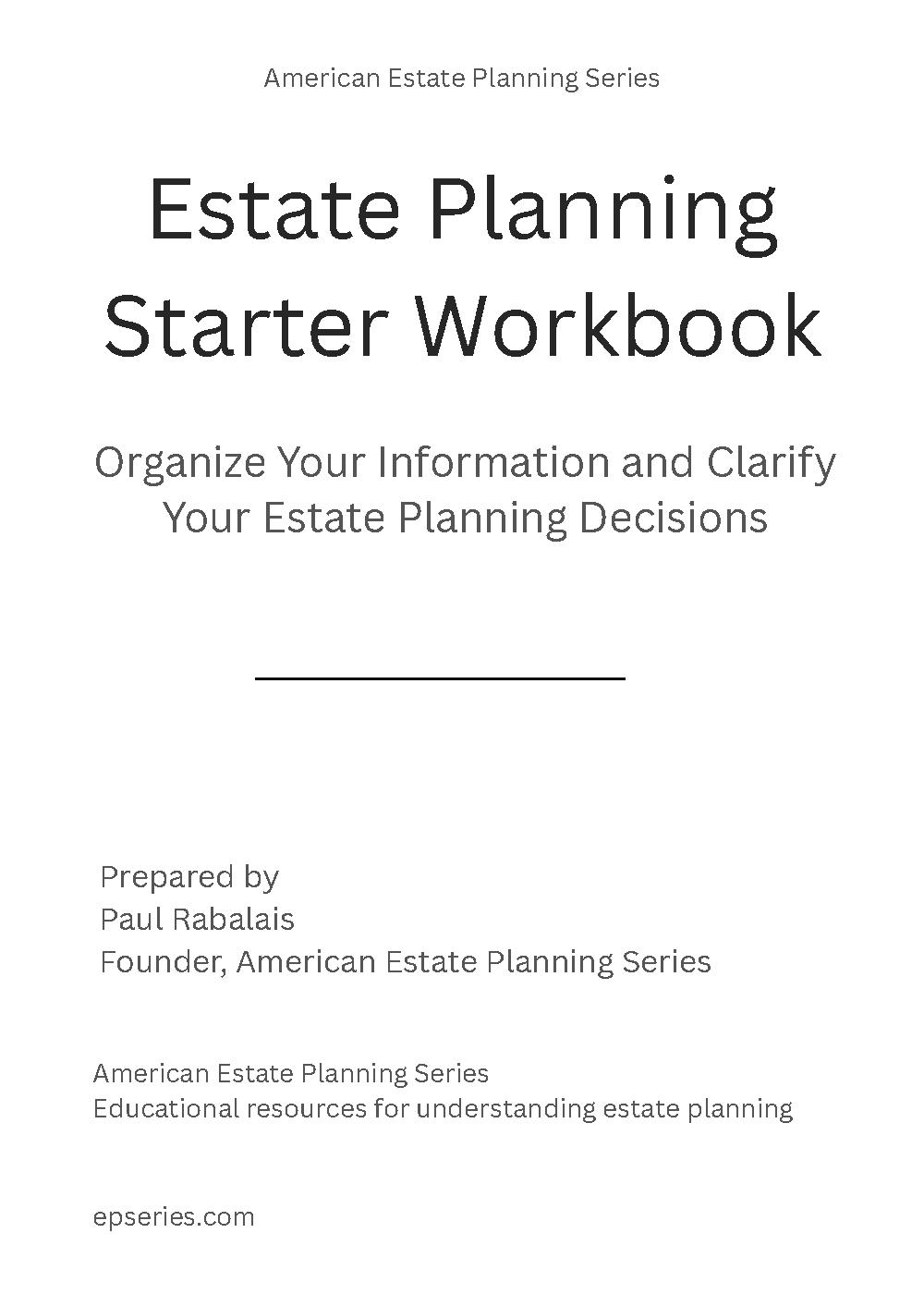
17-page fillable PDF
Download instantly — no email or signup required
The Estate Planning Starter Workbook is designed to help individuals and families begin organizing the information commonly needed for estate planning.
Completing the workbook can help clarify planning goals, identify important assets, and prepare for conversations with an estate planning professional.
This workbook may be helpful if you:
want to begin organizing your estate planning information
are thinking about creating or updating an estate plan
want to better understand your assets and beneficiaries
plan to meet with an estate planning attorney in the future
want to organize information for your family
What the workbook includes:
Personal and family information
Asset and property overview
Beneficiary designations
Planning goals and priorities
Notes and questions for future planning discussions
Many people find it helpful to complete the workbook before meeting with an estate planning attorney or beginning the planning process.
Pennsylvania Estate Planning Resource Library
Explore Pennsylvania-specific and national estate planning videos covering wills, trusts, probate, powers of attorney, healthcare planning, beneficiary designations, taxes, long-term care planning, and other topics important to Pennsylvania families.
Start Here
Before You Create a Will or Trust in Pennsylvania, Watch This
Meet Your Pennsylvania Estate Planning Attorney
Pennsylvania Estate Planning Essentials
Do You Need a Will or a Trust in Pennsylvania?
Why Having a Will Is Not Enough in Pennsylvania
You May Still Need a Pennsylvania Will—Even If You've Avoided Probate
You've Been Together 20 Years... But Pennsylvania Law May Not Protect Your Partner
Without a Power of Attorney, Your Life Becomes a Court Case (Pennsylvania)
Pennsylvania Wills
What Happens If You Die Without a Will in Pennsylvania?
10 Common Pennsylvania Will Mistakes That Can Cost Your Family
One Pennsylvania Will Provision That Can Save Your Family a Second Probate
Pennsylvania Trusts
Do You Need a Will or a Trust in Pennsylvania?
Why Having a Will Is Not Enough in Pennsylvania
What Happens to Your Car When You Die? (Pennsylvania)
Pennsylvania Probate & Estate Administration
What Happens to Your Car When You Die? (Pennsylvania)
Do Children Have To Pay Their Parents' Debts After Death in Pennsylvania?
The Difference Between Probate, Trust Administration, and Estate Administration
Pennsylvania Power of Attorney
Choose Your Power of Attorney Agent Wisely (Pennsylvania)
Why Every Caregiver Needs a Power of Attorney (Pennsylvania)
Without a Power of Attorney, Your Life Becomes a Court Case (Pennsylvania)
Pennsylvania Healthcare Planning
Pennsylvania Healthcare Power of Attorney, Living Will, DNR & POLST Explained
How to Choose the Right Healthcare Power of Attorney | Pennsylvania
Living Will in Pennsylvania: Treatment vs. Comfort at the End of Life
Pennsylvania Beneficiary Designations & Asset Transfers
Before You Add Beneficiaries to Every Account, Watch This (Pennsylvania)
Pennsylvania Taxes & Wealth Transfer Planning
How Pennsylvania Inheritance Tax Works
What Happens to Your Car When You Die? (Pennsylvania)
Pennsylvania Elder Law & Long-Term Care Planning
You've Been Together 20 Years... But Pennsylvania Law May Not Protect Your Partner
Pennsylvania State-Specific Topics
How Pennsylvania Inheritance Tax Works
Moved to Pennsylvania? Do You Need to Redo Your Estate Plan?
Pennsylvania Government Forms & Resources
Helpful Pennsylvania government and educational resources related to probate, inheritance tax, and estate planning administration.
Pennsylvania Inheritance Tax Information
Official Pennsylvania Department of Revenue information about inheritance tax rates, filing requirements, exemptions, and related forms.
Pennsylvania Vehicle Title Transfer (MV-39)
Transfer a Vehicle to a Surviving Spouse Without Probate
If a Pennsylvania resident dies owning a vehicle that will pass to a surviving spouse, PennDOT Form MV-39 may allow the title to be transferred without opening probate. In his video, Patrick explains when this form may be used and why it can simplify the transfer process.
Ready To Learn More?
Whether you're just getting started or reviewing an existing estate plan, personalized guidance can help ensure your wishes are documented and your loved ones are protected.
As the Pennsylvania Contributing Attorney for the American Estate Planning Series™, Patrick Cawley helps individuals and families throughout Pennsylvania with estate planning, incapacity planning, probate, elder law, and long-term care planning.
Contact Keystone Elder Law, P.C.
📞 (717) 697-3223