

North Carolina Estate Planning Resources
Explore videos, answers to common questions, and educational resources designed to help North Carolina families better understand estate planning.
Jump To:
Meet Your North Carolina Estate Planning Team


📞 (704) 259-7656
www.providencewillsandtrusts.com
Serving the Charlotte Metropolitan Area
Zachary B. Setzer
Founder, Providence Wills & Trusts
North Carolina Contributing Attorney, American Estate Planning Series
Zachary Setzer is a North Carolina estate planning attorney and the founder of Providence Wills & Trusts. He focuses his practice on helping individuals and families create wills, trusts, powers of attorney, healthcare directives, and other planning strategies designed to protect loved ones and preserve family legacies.
A graduate of the University of North Carolina at Chapel Hill and Duke University School of Law, Zach founded his firm with a commitment to providing clear guidance, flat-fee planning, and long-term relationships with clients. He is passionate about helping families plan ahead, avoid unnecessary conflict, and create lasting peace of mind for future generations.
Richard W. Fox
Attorney, Providence Wills & Trusts
Richard Fox is a North Carolina estate planning attorney with Providence Wills & Trusts. After graduating from Boston University, Richard served as an officer in the United States Marine Corps, including a deployment to Iraq, before beginning his legal career.
Today, Richard helps North Carolina individuals and families create wills, trusts, powers of attorney, healthcare directives, and other planning strategies designed to protect loved ones and preserve family legacies. Through his educational videos for the American Estate Planning Series, he helps families better understand trusts, probate, wills, inheritance planning, and other important estate planning topics.
Common North Carolina Estate Planning Questions
Find answers to common North Carolina estate planning questions and learn the concepts that affect many North Carolina families.
-
Many North Carolina families can accomplish their goals with a will-based estate plan, while others may benefit from a revocable living trust. The right choice depends on factors such as your assets, family situation, privacy concerns, and probate goals.
-
If you die without a valid will, North Carolina law determines who inherits your property. The distribution may not reflect your wishes and can create additional complications for your loved ones.
-
Probate is the legal process used to transfer certain assets after death. In North Carolina, probate matters are generally handled through the Clerk of Superior Court. Proper planning can help simplify the process for family members.
-
A power of attorney allows you to appoint someone to handle financial and legal matters if you become unable to act for yourself. Without one, loved ones may need court involvement to manage certain affairs.
-
A healthcare power of attorney allows you to appoint someone to make medical decisions on your behalf if you cannot communicate your wishes. It is often paired with an advance directive or living will.
-
Many people should review their estate plan every few years and after major life events such as marriage, divorce, births, deaths, significant changes in assets, or moving to another state.
-
Generally, no. A will directs how probate assets are distributed, but it does not avoid probate. Other planning strategies may help certain assets pass outside of probate.
-
In many cases, yes. Assets such as life insurance policies, retirement accounts, and certain financial accounts generally pass according to beneficiary designations rather than the instructions contained in a will.
-
No. Estate planning helps families of many different financial backgrounds. Planning can address guardianship for children, incapacity planning, healthcare decisions, beneficiary designations, and the orderly transfer of assets.
-
The best time is before a crisis occurs. Meeting with an attorney early allows you to create a plan while you have the opportunity to carefully consider your goals and options.
Estate Planning Starter Workbook
A simple worksheet designed to help individuals and families organize the key information needed for estate planning.
Completing the workbook can help clarify planning goals, identify important assets, and prepare for conversations with an estate planning professional.
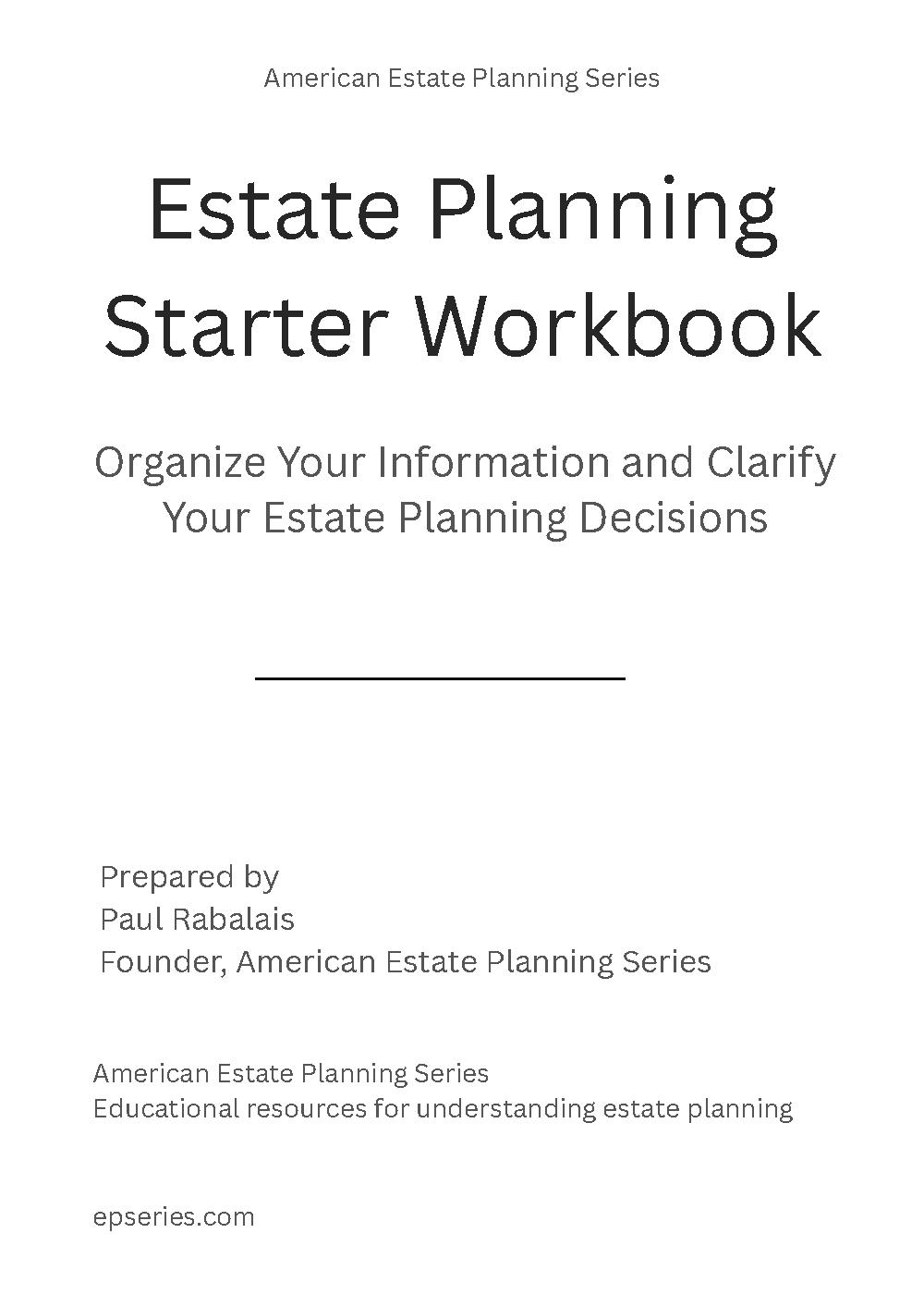
17-page fillable PDF
Download instantly — no email or signup required
The Estate Planning Starter Workbook is designed to help individuals and families begin organizing the information commonly needed for estate planning.
Completing the workbook can help clarify planning goals, identify important assets, and prepare for conversations with an estate planning professional.
This workbook may be helpful if you:
want to begin organizing your estate planning information
are thinking about creating or updating an estate plan
want to better understand your assets and beneficiaries
plan to meet with an estate planning attorney in the future
want to organize information for your family
What the workbook includes:
Personal and family information
Asset and property overview
Beneficiary designations
Planning goals and priorities
Notes and questions for future planning discussions
Many people find it helpful to complete the workbook before meeting with an estate planning attorney or beginning the planning process.
Featured Estate Planning Videos
These foundational estate planning videos address topics that affect families throughout North Carolina and across the United States.
Do You Need a Trust or a Will in North Carolina?
How Probate Works in North Carolina
6 Ways North Carolina Estate Planning Is Different
North Carolina Wills
Do You Need a Trust or a Will in North Carolina?
North Carolina Trusts
Who Does What in a Living Trust? (North Carolina)
Do You Need a Trust or a Will in North Carolina?
North Carolina Beneficiary Designations
How Beneficiary Designations Help You Avoid Probate (North Carolina)
North Carolina Probate
How Probate Works in North Carolina
Probate in North Carolina involves a series of court-supervised steps. The videos below take a closer look at the major stages of the process so executors and families can better understand what happens from beginning to end.
How Probate Works in North Carolina: Step by Step
Each video stands on its own, or you can watch them in order to follow the North Carolina probate process step by step.
Step 1 — Starting Probate: Letters Testamentary
Learn how a North Carolina probate estate is opened, what documents may be required, and how the executor receives legal authority to act.
Step 2 — Notice to Creditors & Estate Debts
Learn how creditors are notified, how claims against the estate are handled, and why an executor generally is not personally responsible for the deceased person’s debts.
Step 3 — The 90-Day Inventory
Learn how executors identify, value, and document probate assets and what must be filed with the Clerk of Court.
North Carolina Powers of Attorney
What Adult Children Need to Know About Aging Parents and Estate Planning
Power of Attorney Explained (The Document That Can Save Your Family)
North Carolina Healthcare Directives
Why Your Estate Plan Should Name Backups for Everything
What a Healthcare Directive Does
North Carolina Homes & Real Estate
Why North Carolina Real Estate Is Different After Death
3 Ways to Own Real Estate in North Carolina — And What Happens at Death
Should You Add Your Child to Your House? (North Carolina)
North Carolina-Specific Topics
How Probate Works in North Carolina
Ready To Learn More?
Whether you're just beginning to explore estate planning or ready to create a comprehensive plan, professional guidance can help ensure your wishes are clearly documented and your loved ones are protected.